Gamifying Recovery: Why VR is the Next Big Breakthrough in Stroke Rehab
Overcoming the Motivation Barrier
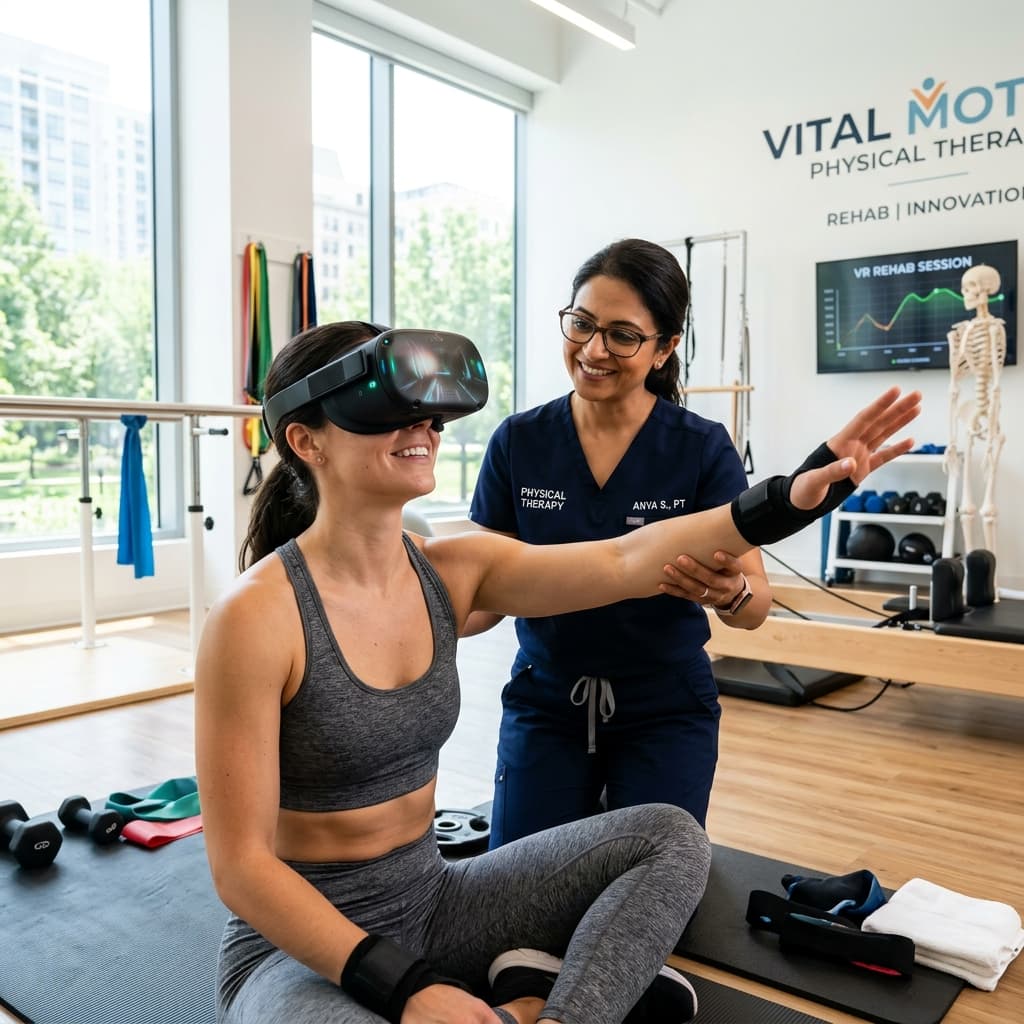
Neuro-rehabilitation is a marathon, not a sprint. One of the greatest challenges physiotherapists face when treating stroke survivors is maintaining patient motivation over months of repetitive exercises. Enter Virtual Reality (VR) and Augmented Reality (AR)—technologies that are rapidly becoming standard tools for enhancing patient engagement.
Simulating Real-World Challenges
VR allows therapists to place patients in safe, controlled, yet highly immersive virtual environments. Instead of simply lifting a weight in a clinical gym, a stroke survivor might be tasked with "reaching for apples in an orchard" or "navigating a busy grocery store aisle." This task-oriented training is far more effective for neuro-cognitive integration, as it forces the brain to process spatial awareness, balance, and motor commands simultaneously.
The Science of Gamification
By gamifying therapy—adding point systems, visual feedback, and rewarding milestones—VR triggers the release of dopamine in the brain. This neurochemical response is essential for learning and memory consolidation, making the physical therapy session both more enjoyable and neurologically impactful.
The Hybrid Future
As VR headsets become more accessible, the industry is moving toward hybrid care models where patients can continue their gamified neuro-rehab exercises at home while their physiotherapist monitors their progress remotely. This continuous, engaging care model is proving to be a game-changer for long-term stroke recovery.